How to Make Money Online in 2026: A Beginner's Complete Guide (No Experience Needed)
Most people searching for ways to make money online hit a wall of recycled ideas, vague advice, and outright scams. The good news: there are more legitimate paths to building real income from home in 2026 than ever before — and getting started costs far less than most people think.
This guide skips the theory and breaks down the methods that actually pay. You'll see what they realistically earn, how long until your first dollar arrives, and the exact first steps to take. Whether you have five hours a week or fifty, a marketable skill or none yet, there's a path here that fits your life.
By the end, you'll know which two or three options match your situation — and exactly what to do next.
The Two Types of Online Income: Which One Fits Your Life Right Now?
Before chasing any specific method, understand that all online income falls into one of two categories: service-based or product-based. Your current schedule and financial situation should determine which you start with.
Service-based income covers freelancing, virtual assistance, and coaching. You're trading a skill directly for money. Most beginners land their first paid work within one to three weeks. The tradeoff is clear: your income pauses when you do.
Product-based income includes digital downloads, print-on-demand, and affiliate marketing. These take longer to gain traction but create income that doesn't depend on your calendar — the kind that pays you while you sleep, which is exactly what Digital Flip is built around.
Before committing to any method, be honest about two things: how many hours per week you can realistically dedicate, and whether you need income this month or can afford to build over the next few months. Your answers drive everything else.
Freelancing: The Fastest Way to Your First Online Paycheck.
Freelance work remains the most direct path to earning money online for beginners in 2026. Writing, graphic design, video editing, and social media management are all consistently in demand on platforms like Upwork and Fiverr. You don't need a degree or an existing portfolio. You need one clear service, one completed sample that demonstrates it, and a profile that speaks to a specific type of client.
What you can realistically earn: Fiverr beginners typically earn $50–$150 in their first month, climbing to $300–$600 by month three as reviews build and packages improve. Upwork operates differently — you pitch for projects rather than list a gig. The average Upwork project is worth around $800, with a flat 10% service fee compared to Fiverr's 20% cut. Either platform works well at the start.
First steps: Set up a free PayPal or Wise account before you take your first order. Fiverr holds funds for 14 days after delivery; Upwork releases payment within five days of client approval. Use a free tool like Wave or a simple Google Sheet to track income from day one. The startup cost for freelancing is effectively $0 — which makes it the right starting point if you need to make money online this month.
Selling Digital Products: Build Once, Earn on Repeat
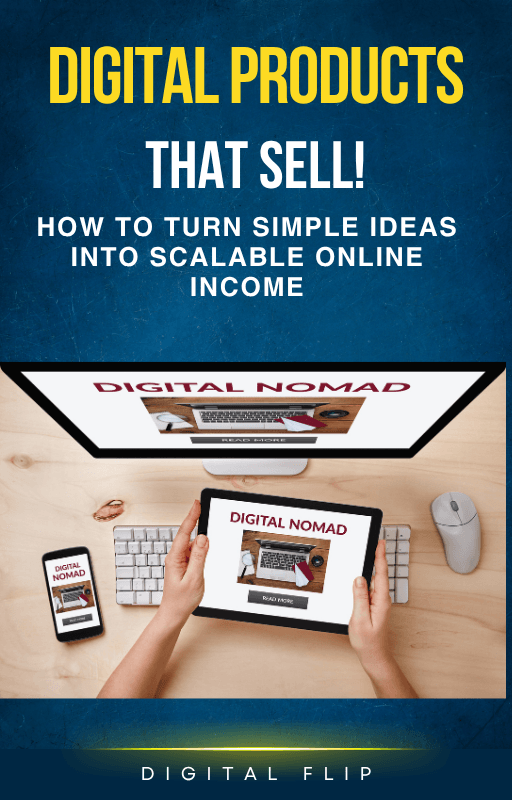
Digital products — eBooks, templates, trackers, cheat sheets, Canva designs, and planners — cost nothing to duplicate and nothing to ship. You create the product once and sell it for years. Profit margins run close to 100% after platform fees, which is why this model is the engine behind everything Digital Flip builds.
Platforms like Etsy, Gumroad, and Payhip make it easy to list products and get paid with minimal setup. The best-performing digital products solve a specific, immediate problem. Generic, unfocused products stall. Specific, problem-solving products sell.
What sells best right now: On Etsy, printable planners, budget trackers, and beginner guides consistently outperform broad offerings. On Gumroad, niche how-to guides and digital starter kits perform well because buyers arrive from focused promotion or a creator's own audience.
How Digital Flip helps: If you're not sure what to create first, Digital Flip removes the guesswork. The Digital Flip store carries pre-built digital products — eBooks, templates, and step-by-step guides — that beginners can adapt and launch without starting from scratch. You focus on listing, pricing, and promoting from day one.
Create a free seller account on Etsy or Gumroad, connect a Stripe or PayPal payout, and list your first product. Most sellers see their first sale between week two and month two, with consistent monthly income building as reviews and search visibility grow.

Affiliate Marketing: Make Money Online Without a Product
Affiliate marketing means promoting someone else's product and earning a commission every time someone buys through your unique link. No inventory, no customer service, no product creation. Amazon Associates, ShareASale, and Impact are among the most beginner-friendly networks, and joining is free. The real investment is time — building an audience or content library that drives consistent traffic to your links.
Realistic timeline: Most beginners earn their first affiliate commission within 30–60 days when they're actively publishing. Monthly income of $200–$800 is realistic in the first six months for consistent content creators. The path to $2,000–$5,000 per month takes 12–24 months for most people, but the income compounds as your content library grows.
The biggest mistake beginners make: promoting random products instead of building a focused niche. Pick one audience, one content platform (a blog, a YouTube channel, or a dedicated social account), and three to five affiliate programs that genuinely serve that audience. Spreading across too many niches at once delays results.
Digital Flip's affiliate marketing training walks through exactly this process: how to choose a niche, structure content for conversions, and identify programs with competitive commission structures.
Print-on-Demand: Physical Products, Zero Inventory
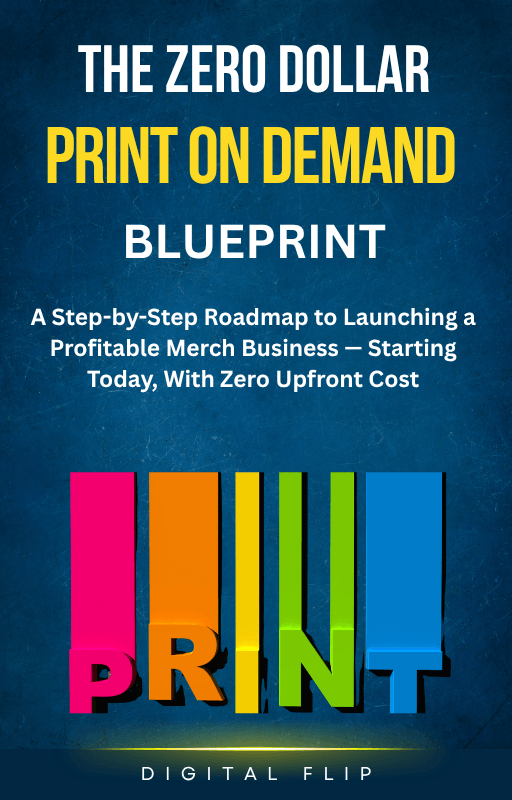
Print-on-demand lets you design products — t-shirts, mugs, notebooks, phone cases — and sell them without holding any stock. When a customer orders, the supplier prints and ships directly to them. You keep the margin. Platforms like Printify, Redbubble, and Merch by Amazon handle fulfilment entirely. Your job is uploading designs and making your listings discoverable.
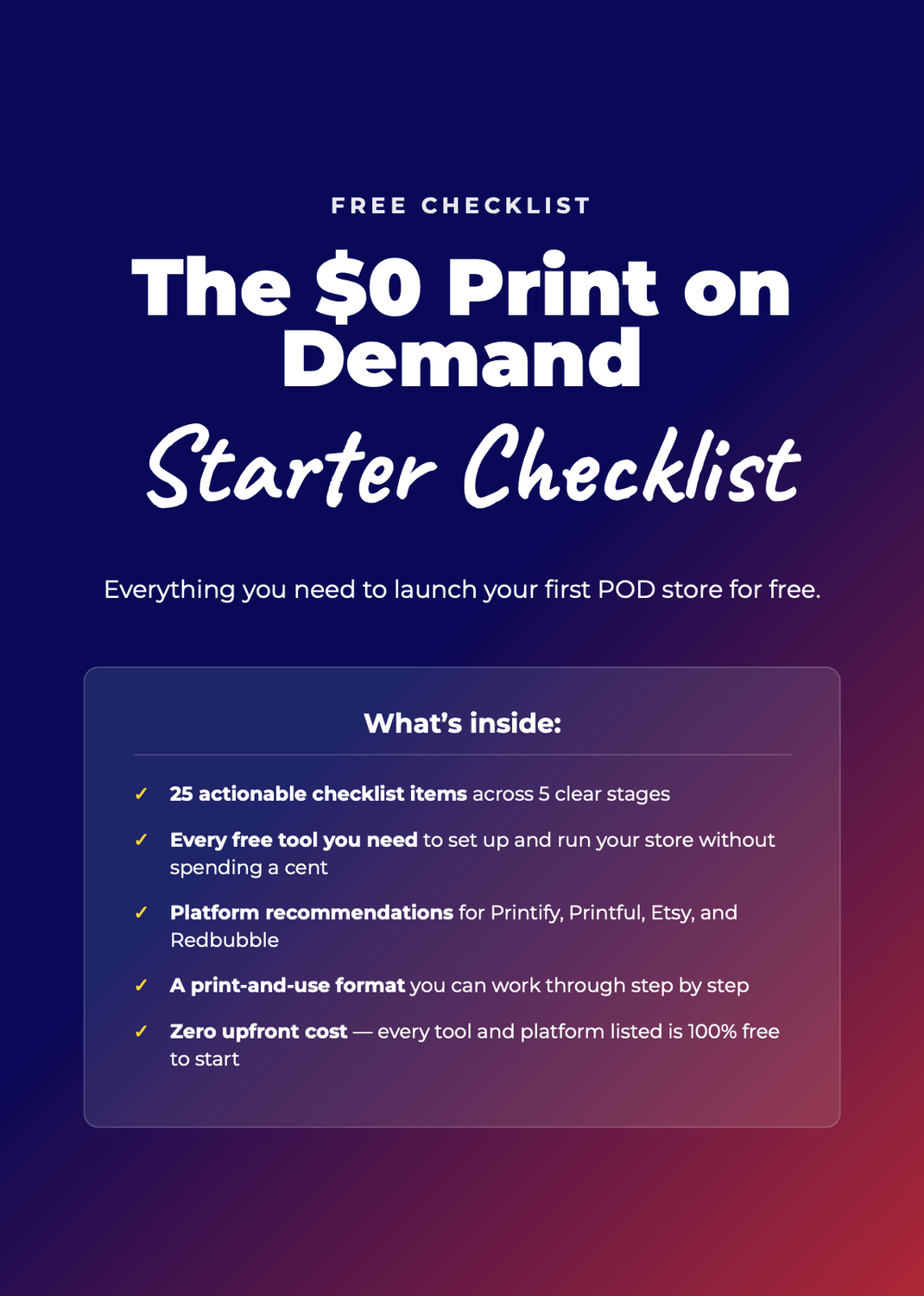
Platform comparison for beginners: Printify's free plan gives you access to 900+ products with no subscription fee and profit margins of 35–50%. Printful charges slightly higher base costs but offers more consistent quality and premium branding options — worth considering once you're generating steady sales. Both integrate directly with Etsy and Shopify.
First steps: You can start a print-on-demand store for $0 using Redbubble's free tier or the Printify–Etsy integration. Canva's free plan is enough to create clean, sellable designs. Plan to list 20–30 products before sales become consistent, since Etsy discoverability depends heavily on having multiple listings in the algorithm. Most sellers see their first sale within two to six weeks when they research trending niches and optimise product titles and tags for search.
How to Spot Online Income Scams Before They Cost You
Every legitimate way to make money online shares one trait: it never asks you to pay before you earn. Upfront fees for "training access," promises of $500 a day for simple tasks, and multi-level structures disguised as remote jobs are the most common traps targeting beginners. Federal Trade Commission (FTC) which is a US agency promoting consumers shows employment scam losses jumped from $90 million in 2020 to over $500 million in 2024. These aren't rare edge cases — they're widespread and specifically designed to target people who are new to online income.
Red flags to watch for:
Any opportunity that requires payment before you start earning
Promises of unusually high earnings for minimal or simple work
Unsolicited job offers via DMs, cold emails, or social ads
Requests for bank account details or personal information before employment
Structures that emphasise recruiting others over an actual product or service
Before joining any platform or opportunity, search the company name alongside "review" and "scam" on Google. Check the Better Business Bureau at bbb.org for complaints. Verify the company's official website independently — never click links from the job offer itself. Legitimate platforms like Upwork, Etsy, Amazon, and Gumroad have transparent fee structures publicly listed on their own sites.
Real online income requires real work. The difference is that you control the work, the schedule, and the ceiling.
Your Next Step Starts This Week, Not Someday
Freelancing gets you paid fastest. Digital products and print-on-demand build passive income over time. Affiliate marketing rewards consistent content creators who commit to a focused niche. The mistake most people make is starting all four methods at once and mastering none.
Pick the one path that fits your schedule and skill level. Take one concrete action this week. Build from there.
If you want to skip the scattered research phase and start with a clear system, Digital Flip is built for exactly this moment. The store and training library gives beginners access to ready-to-sell digital products, eBooks, affiliate marketing training, print-on-demand guides, and step-by-step roadmaps — all in one place. The fastest way to earn your first dollar online is to start with a solid foundation.
Browse the Digital Flip store → www.digitalflip.org/store
FAQ: Making Money Online for Beginners in 2026
How quickly can I make money online as a beginner? Freelancing is the fastest — most beginners land their first paid work within one to three weeks. Digital products and print-on-demand typically take two to eight weeks to generate a first sale. Affiliate marketing has the longest ramp-up, with most beginners seeing their first commission between 30 and 90 days in.
Do I need money to start making money online? Most of the methods in this guide start at $0. Freelancing, Redbubble, Gumroad, and the free tiers of Printify and Canva require no upfront investment. Be cautious of any opportunity that demands payment before you earn anything — that's a common scam pattern.
Is making money online legitimate? The methods themselves are legitimate. Millions of people earn real income through freelancing, digital products, affiliate marketing, and print-on-demand every year. Scams exist but follow recognisable patterns — upfront fees, unrealistic income promises, requests for personal banking info. Stick to established platforms and trust consistent effort over shortcuts.
Which method is best for someone with no experience? Freelancing is the most accessible starting point because it requires only one skill and pays the fastest. If you prefer a more passive approach, digital products and print-on-demand have low barriers to entry and no client interaction required. Digital Flip's product library covers both.
Start your online journey today by exploring your options in the Digital Flip Store
Written by Digital Flip
Digital Flip is a digital products brand dedicated to helping complete beginners and 9-to-5 workers build sustainable online income. We cut through the noise, skip the theory, and deliver practical tools you can act on today. Explore our full product range at digitalflip.org/store.
SHARE